At Simpler Dental, we combine modern materials with careful treatment planning to restore teeth that are weakened, broken, or cosmetically compromised. Our goal is to offer solutions that look natural and feel strong, using techniques and ceramics that have improved dramatically over the past decade.
Tooth enamel is exceptionally hard, but teeth can still suffer from decay, trauma, large restorations, root canal therapy, or the effects of clenching and grinding. In many of these situations, a filling alone does not provide the support a tooth needs to function reliably over time. A full-coverage crown rebuilds the tooth’s shape and strength while protecting what remains of the natural structure.
Today’s ceramic crowns let us restore teeth without metal beneath the surface. Advances in dental ceramics and digital workflows mean we can deliver restorations that are biocompatible, stain-resistant, and highly lifelike in color and translucency. For most smiles, ceramic crowns now offer an excellent balance of appearance and performance.
We tailor every crown to a patient’s functional needs and cosmetic goals, balancing durability and esthetics to produce results that fit comfortably in the mouth and with the rest of the smile. Our planning focuses on long-term function, comfortable bite relationships, and a natural look that complements the patient’s face.
A crown is a full-coverage restoration that replaces lost tooth structure and redistributes chewing forces so the remaining tooth doesn’t fracture. Dentists commonly recommend crowns when a tooth has too little healthy structure left to support a filling or when a previous filling has failed. Crowns also protect teeth that have been treated with root canal therapy, which are often more brittle than untreated teeth.
Crowns are also used to restore an implant, acting as the visible replacement tooth attached to the implant post, and they serve as the anchor teeth for fixed bridges when a missing tooth needs to be replaced in a traditional way. In cosmetic cases, a crown can correct a tooth that is discolored, misshapen, or proportionally small when compared with the rest of the smile.
Deciding whether a crown is the best option involves weighing the amount of remaining tooth, the forces the tooth will face (for example, chewing heavy foods or nighttime grinding), and the appearance you want to achieve. We assess these factors during an examination and explain the rationale for recommending a crown so you can make an informed decision.

All-ceramic crowns remove the need for a metal substructure, which improves the way light travels through the restoration and produces a more toothlike sheen. Because ceramics can reproduce subtle variations in translucency, they often blend more naturally with surrounding teeth than crowns with metal cores.
Biocompatibility is another benefit: ceramic materials are generally well tolerated by soft tissues and do not cause the grayish gumline that sometimes appears with older metal-based crowns. For patients with metal sensitivities or a preference for metal-free dentistry, ceramic crowns are an especially attractive option.
Modern ceramics are also engineered for strength. Materials like lithium disilicate and high-strength zirconia provide durability suitable for both front and back teeth. This means patients no longer need to choose between appearance and resilience in many cases; ceramics can deliver both.

Not all ceramic crowns are identical. The choice of material depends on the tooth’s location, the amount of force it will bear, and the esthetic demands of the case. For example, a front tooth often needs a highly translucent material to match the neighbor teeth, while a back molar requires a material that resists heavy chewing forces.
We consider each material’s properties (translucency, flexural strength, and wear characteristics) alongside how much tooth needs to be removed to place the crown. Our aim is to preserve as much natural tooth as possible while using a material that will last and look right in your mouth.
Common options we use include:
Lithium disilicate for excellent esthetics and good strength
Leucite-reinforced pressable ceramics for very natural translucency in front teeth
Monolithic zirconia for high-demand posterior restorations where strength is essential
High-translucency zirconia when strength is needed without sacrificing a more lifelike appearance
We explain the pros and cons of each option for your specific case and recommend the material that best balances longevity and esthetics for your smile.

Planning begins with a careful exam and imaging to understand the tooth’s condition, the bite, and surrounding structures. We use digital tools, such as intraoral scanning and high-resolution images, to create an accurate map of your mouth and to communicate how the finished crown will look and function.
To prepare the tooth, we remove any decay or old restorative material and shape the remaining structure to provide space for the new crown while conserving as much healthy tooth as possible. In many cases digital impressions replace traditional putty impressions, giving us a more comfortable and precise record for lab fabrication or same-day milling.
Temporary protection is placed while the final crown is being made, and during the delivery appointment the definitive crown is assessed for fit, color, and bite. Adjustments are made to ensure a comfortable bite and smooth contacts with neighboring teeth before the crown is permanently cemented or bonded.
Throughout the process, we focus on minimizing surprises by showing you images and models, answering questions, and coordinating any necessary adjunctive care, such as treating gumline concerns, so the final result is both healthy and esthetic.
With reasonable care, ceramic crowns perform well for many years. Daily oral hygiene, brushing with a soft-bristled brush and flossing, helps prevent decay at the crown margins and protects the supporting tooth and surrounding gum tissue.
Avoiding extremely hard or sticky foods and using a nightguard if you grind or clench can reduce the risk of chipping or undue wear. Regular dental checkups let us monitor the crown, polish any rough spots, and check that the bite is stable so the restoration continues to function comfortably.
If a crown ever chips or becomes loose, prompt evaluation allows us to repair or replace it before the underlying tooth is compromised. Routine maintenance and attention to early signs of trouble are the best ways to preserve your investment in a ceramic restoration.
Our team, led by Dr. Himanshu Mehrotra, brings focused experience in restorative and cosmetic dentistry, so we can coordinate crown therapy with other treatments when necessary. We aim to deliver results that meet both functional needs and appearance goals.
In summary, ceramic crowns provide a versatile, natural-looking way to restore teeth that are damaged, misshapen, or under heavy stress. If you would like to learn more about whether a ceramic crown is right for you, please contact us for more information.


A ceramic crown is a full-coverage dental restoration crafted from glass- or crystalline-based ceramics to rebuild a damaged or weakened tooth. It replaces lost tooth structure, redistributes chewing forces, and protects the remaining natural tooth to reduce the risk of fracture. Because it contains no metal substructure, a ceramic crown is designed to reproduce the light transmission, color, and translucency of natural enamel.
Compared with porcelain-fused-to-metal or metal-based crowns, all-ceramic restorations avoid the grayish gumline and often provide a more lifelike appearance. Modern ceramics can offer strength that approaches metal-based options while delivering superior esthetics. The choice of crown material depends on functional needs, the tooth’s location, and the visual outcome you want to achieve.
A ceramic crown is typically recommended when a tooth has lost too much healthy structure to support a durable filling, when a previous restoration has failed, or after root canal therapy leaves a tooth more brittle. Crowns are also used when a tooth is fractured, severely worn, or cosmetically compromised in a way that a filling cannot correct. Teeth subjected to heavy biting forces, such as from clenching or grinding, may also benefit from the added protection a crown provides.
Deciding between a filling and a crown involves assessing how much tooth remains, the anticipated chewing forces, and the esthetic goals for the tooth. We examine these factors during a clinical evaluation and use imaging and digital scans to guide the recommendation. This process ensures that the chosen restoration protects long-term function while meeting the patient’s appearance expectations.
Lithium disilicate is a glass-ceramic valued for its combination of attractive esthetics and good strength; it is commonly used for front teeth and many premolar restorations. This material offers excellent color matching and polishability, making it a strong choice when appearance is a priority. It can be fabricated in a lab or milled for efficient same-day restorations.
Leucite-reinforced pressable ceramics provide very natural translucency and are often chosen for highly visible front teeth where subtle light effects matter most. These materials can reproduce the layered look of natural enamel and are especially useful when fine color matching is required. They are typically pressed and layered in a lab to achieve optimum esthetic detail.
Zirconia comes in several formulations, including monolithic zirconia for high-demand posterior restorations and high-translucency zirconia when a more lifelike appearance is needed. Monolithic zirconia offers exceptional fracture resistance and is well suited for molars and cases with limited space. High-translucency zirconia blends improved esthetics with substantial strength, giving clinicians a versatile option for many positions in the mouth.
Metal-free ceramic crowns often produce a more favorable cosmetic outcome because they allow light to pass through the restoration in a manner similar to natural enamel, avoiding the opaque appearance that can occur with metal cores. This translucency helps the crown blend with adjacent teeth and contributes to a more natural overall smile. Patients who prioritize seamless esthetics frequently choose all-ceramic options for front and visible teeth.
From a tissue standpoint, many ceramic materials are well tolerated by the surrounding gum tissue and reduce the risk of a grayish discoloration at the crown margin that sometimes appears with metal-based crowns. For patients with metal sensitivities, metal-free restorations eliminate exposure to metal alloys that could cause reactions. Good restorative margins and proper oral hygiene remain important to maintain healthy gum tissue regardless of the material chosen.
We base material selection on a careful evaluation of the tooth’s location, the amount of remaining tooth structure, the forces the tooth will encounter, and the esthetic goals of the patient. Digital tools such as intraoral scanning and high-resolution imaging help us visualize the final outcome and assess occlusion and spatial requirements. These diagnostics allow us to recommend a material that balances strength, translucency, and minimal tooth reduction.
At Simpler Dental, the treatment plan is tailored to the individual case and explained clearly so patients understand the advantages and trade-offs of each option. We outline why a given ceramic is likely to perform best in your mouth and coordinate any adjunctive care, such as gum treatment or bite adjustments, to optimize the long-term result. That collaborative approach helps ensure the chosen restoration meets both functional needs and esthetic expectations.
Treatment begins with a comprehensive examination and imaging to evaluate tooth structure, surrounding tissues, and bite relationships. Digital impressions or intraoral scans are often taken to produce precise records of your mouth and to communicate details to the dental lab or in-office milling system. This digital workflow improves fit accuracy and reduces the need for multiple adjustments at delivery.
During the preparation visit the dentist removes decay and shapes the tooth to provide space for the crown while conserving as much healthy structure as possible. A temporary crown is placed when lab fabrication is required, and patients are given care instructions to protect the provisional restoration. If same-day milling is available, the final crown can sometimes be fabricated and placed in a single appointment.
At the delivery appointment the crown is evaluated for fit, color harmony, and bite; minor adjustments are made to ensure comfortable contacts and proper occlusion. Once both clinician and patient are satisfied, the crown is permanently cemented or bonded and the bite is rechecked. We provide post-procedure guidance and schedule follow-up checks to monitor healing, function, and long-term appearance.
Ceramic crowns can perform well for many years when properly designed and cared for; longevity depends on the chosen material, the quality of the preparation and cementation, and the forces placed on the restoration. Regular dental examinations allow the dentist to monitor margins, contacts, and wear patterns and to address minor issues before they become serious. A well-planned ceramic crown often provides durable function while maintaining esthetics over time.
Factors that influence lifespan include oral hygiene, bruxism or clenching habits, the condition of the supporting tooth and periodontal tissues, and how well the crown fits and occludes with opposing teeth. Protective measures such as nightguards and careful attention to biting habits reduce the risk of chipping or fracture. Prompt evaluation of sensitivity, loosening, or changes at the margin helps preserve both the crown and the underlying tooth.
Daily oral hygiene is essential: brush twice a day with a soft-bristled brush and fluoride toothpaste, and clean between teeth with floss or interdental brushes to prevent decay at the crown margins. Maintaining healthy gums and controlling plaque reduces the risk of recurrent decay and gum problems that can compromise the restoration. Avoiding very hard or sticky foods will also help minimize stress on the crown surface.
If you grind or clench your teeth, wearing a custom nightguard can protect ceramic crowns from excessive forces that lead to chipping or wear. Avoid using teeth as tools to open packaging or bite nonfood items, and report any roughness, sensitivity, or loosening to your dentist promptly. Regular professional cleanings and examinations let the dental team polish the restoration and check that the bite remains stable.
Ceramic crowns are commonly used as the visible restoration on dental implants and can be either cement-retained or screw-retained depending on the restorative plan. When placed on an implant, the crown is fabricated to align with the implant connection and is designed to reproduce natural form and function while protecting surrounding tissues. Implant-supported ceramic crowns allow patients to regain chewing ability and a natural appearance without relying on adjacent teeth for support.
Ceramic crowns can also serve as abutments for traditional fixed bridges when a missing tooth is replaced by joining crowns on neighboring teeth. Planning for a bridge involves evaluating the health and strength of the abutment teeth, the span of the missing tooth, and the occlusal forces the restoration will face. In many cases modern ceramics provide attractive and durable solutions for both implant and bridge applications when carefully selected and executed.
Potential complications include chipping or fracture of the ceramic, decay at the crown margin if oral hygiene is inadequate, sensitivity after treatment, and loosening of the crown. While modern materials and adhesive techniques have reduced many historic problems, no restoration is immune to damage from excessive force or poor maintenance. Early identification of issues during routine checkups improves the likelihood of conservative repair rather than full replacement.
Management strategies include polishing or bonding minor chips, adjusting the bite to minimize harmful contacts, repairing or recementing a loose crown, and replacing a restoration when necessary to protect the tooth beneath. Protective appliances, treatment for parafunctional habits, and periodontal care are often part of the long-term plan to reduce risk. If you have concerns about a ceramic crown, discuss them with your dentist so the team can recommend appropriate evaluation and treatment at the office.
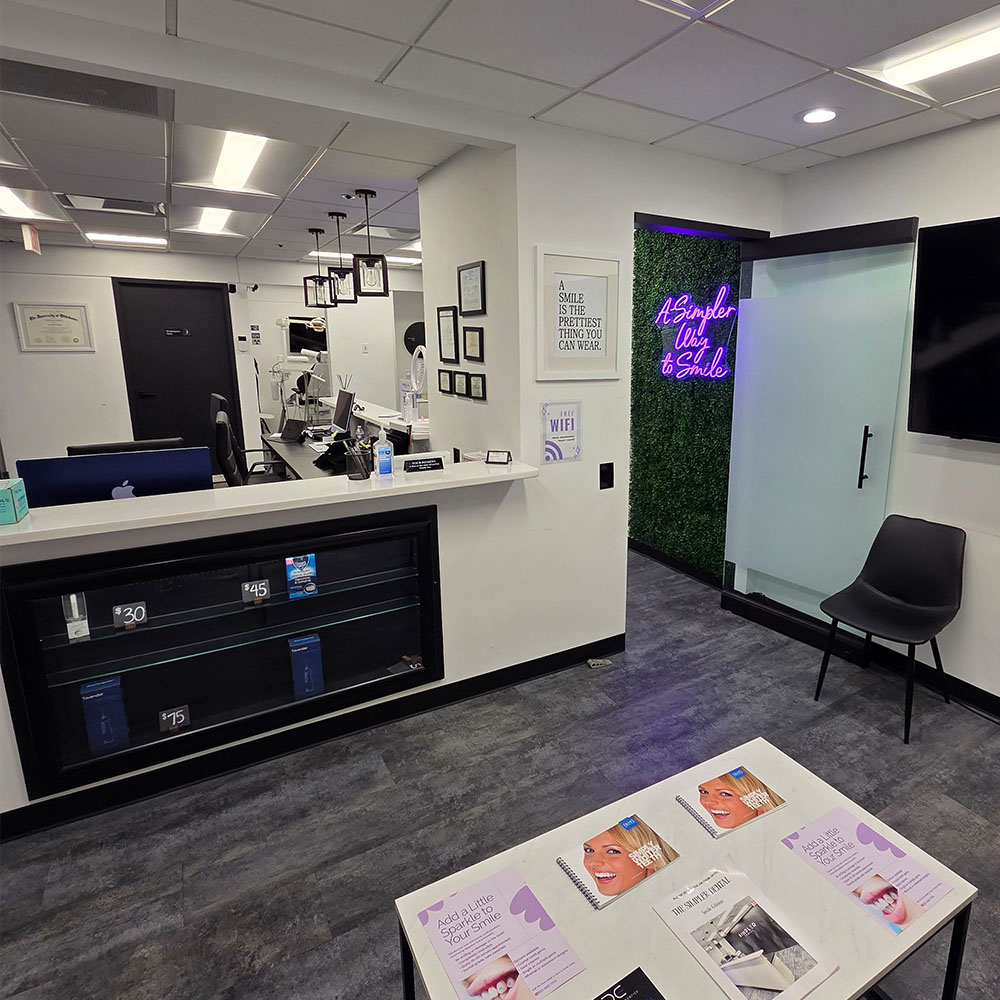
Simpler Dental is currently accepting new patients.
To arrange an appointment, please call our office. New patients may reach us at (202) 221-4689, and existing patients at (202) 545-7774. You may also complete the form below and a member of our team will contact you to confirm a time. If you provide your insurance details in advance, we will verify your coverage prior to your visit.
Our office is located in Unit 820 at 2021 K Street NW, a short walk from the Foggy Bottom-GWU Metro station. Parking is available in the building garage.